

Introduction
Low sugar iced coffee recipes are a simple and refreshing way to enjoy coffee at home without depending on excess sugar, flavored syrups, or artificial sweeteners. For many people, iced coffee is not just a seasonal drink—it quietly becomes part of everyday life, especially when warm weather makes hot coffee feel too heavy.
Over time, I realized that most café-style iced coffees rely too much on sweetness. At first, they taste exciting, but after a while, the sugar starts overpowering the coffee itself. Instead of feeling refreshed, the drink can feel unbalanced and overly rich. That’s when low sugar iced coffee recipes start to make more sense.
These recipes do not remove enjoyment from coffee. They simply shift the focus back to balance. Instead of covering the flavor with sugar, they allow the coffee to stay at the center, supported by simple ingredients and gentle techniques that create smoothness without heaviness.
Making iced coffee at home also brings flexibility. Everyone enjoys coffee differently—some like it strong, others prefer it soft and creamy. Low sugar iced coffee recipes make it easy to adjust strength, milk, and flavor while still keeping the drink light and controlled.
In this guide, you will find five low-sugar iced coffee recipes that are easy to prepare at home using everyday ingredients. Each recipe is designed to feel practical, approachable, and realistic, helping you enjoy iced coffee in a way that stays refreshing, balanced, and sustainable over time.
Understanding Low-Sugar Iced Coffee Recipes
Low sugar iced coffee recipes are not about removing enjoyment from coffee. Instead, they focus on letting the coffee itself remain the main character. Rather than covering bitterness with sugar, these recipes use small amounts of natural sweetness, milk alternatives, spices, or brewing techniques to create smoothness.
When I first started making iced coffee at home, I was surprised by how much better it tasted once I stopped trying to sweeten it heavily.
What makes these recipes different is intention. Each ingredient has a purpose, whether it is to soften acidity, add body, or enhance aroma. This approach results in iced coffee that feels refreshing rather than tiring.
Why Low Sugar Iced Coffee Is Becoming Popular
There are several reasons why people are slowly shifting toward low-sugar iced coffee options:
- Many find regular iced coffee drinks too sweet over time
- Reducing sugar helps maintain steady energy levels
- Coffee flavor becomes more noticeable and enjoyable
- Homemade versions allow better ingredient control
- Lighter drinks feel easier on digestion
I personally relate to this shift because lighter coffee feels easier to enjoy regularly, especially on busy days.
Low sugar iced coffee recipes allow flexibility. You can keep them mild, bold, creamy, or crisp—without feeling restricted.
Choosing the Right Coffee Base for Low-Sugar Iced Coffee Recipes

The foundation of good iced coffee is the brew itself. Poor-quality or overly bitter coffee often encourages people to add more sugar. Choosing the right brewing method can naturally reduce the need for sweetness.
Cold Brew vs Hot Brewed Coffee
Cold brew tends to be smoother and less acidic, making it ideal for low-sugar recipes. Hot brewed coffee can also work well if it is brewed slightly stronger and cooled properly.
I usually switch between cold brew and hot brewed coffee depending on the day, and both work well once you understand their strengths.
Medium Roast Works Best
Medium roast coffee usually offers balanced flavor without sharp bitterness. This makes it easier to enjoy iced without masking it with sugar.
Health Perspective of Low Sugar Iced Coffee Recipes
I don’t think of iced coffee as a health drink, but cutting down sugar made it feel easier on my body over time.
1. More Stable Energy
Lower sugar intake helps prevent sudden energy spikes and crashes, allowing coffee to do its job more steadily.
2. Better Flavor Awareness
Over time, your palate adjusts. You begin noticing subtle notes in coffee that sugar once hid.
3. Supports Long-Term Habits
Low sugar recipes are easier to maintain consistently compared to highly sweetened drinks.
4. Encourages Mindful Drinking
Making iced coffee at home creates awareness of portion sizes and ingredient choices.
Ingredients Commonly Used in Low-Sugar Iced Coffee Recipes
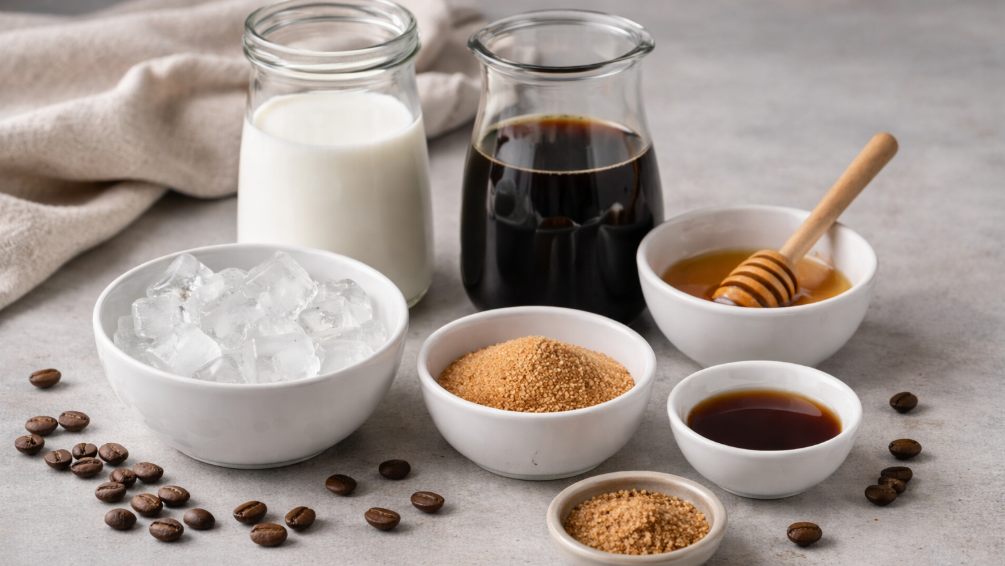
Core Ingredients
- Freshly brewed coffee or cold brew
- Ice cubes
- Unsweetened milk or plant-based milk
Optional Enhancers
- Cinnamon or cocoa powder
- Vanilla extract (unsweetened)
- Oat milk, almond milk, or coconut milk
- A small amount of natural sweetener if needed
I usually keep these optional and add only one at a time so the coffee flavor stays clear.
Using unsweetened ingredients keeps the coffee balanced and adaptable.
Recipe 1: Classic Low-Sugar Iced Coffee
This is the simplest version and a great place to start.
Ingredients
- Strong brewed coffee (cooled) – 1 cup
- Ice cubes—as needed
- Unsweetened milk – 2 to 3 tablespoons
Method
Brew coffee slightly stronger than usual and let it cool completely. Fill a glass with ice, pour the coffee over it, and add milk. Stir gently.
Why It Works
Strong coffee diluted by ice maintains flavor without bitterness. Milk softens edges without adding sugar.
This version is the one I reach for when I want something simple and reliable.
Recipe 2: Low Sugar Iced Coffee with Oat Milk
Oat milk adds natural body without heavy sweetness.
Ingredients
- Cold brew coffee – 1 cup
- Ice cubes
- Unsweetened oat milk – ¼ cup
Method
Add ice to a glass, pour cold brew, and finish with oat milk. Stir lightly.
Flavor Profile
Smooth, slightly creamy, and naturally mellow.
Recipe 3: Cinnamon Iced Coffee Without Added Sugar
Spices can enhance perceived sweetness without sugar.
Ingredients
- Brewed coffee – 1 cup
- Ice cubes
- Unsweetened almond milk – 2 tablespoons
- Ground cinnamon – a small pinch
Method
Add coffee and ice to a glass. Stir in almond milk and sprinkle cinnamon on top.
Why Cinnamon Helps
Cinnamon adds warmth and aroma, which balances bitterness naturally.
Recipe 4: Low Sugar Iced Coffee with Vanilla Notes
Vanilla enhances sweetness perception without sugar.
Ingredients
- Cold brew coffee – 1 cup
- Ice cubes
- Unsweetened milk – 3 tablespoons
- Vanilla extract – 2 to 3 drops
Method
Combine coffee and ice, add milk, and stir in vanilla gently.
Taste Experience
Smooth, lightly aromatic, and comforting without heaviness.
Recipe 5: Light Creamy Iced Coffee Using Blended Ice
This version feels indulgent without being sweet.
Ingredients
- Strong brewed coffee (cold) – 1 cup
- Ice cubes – blended
- Unsweetened milk – ¼ cup
Method
Blend ice briefly to create a slushy texture. Pour coffee over it and add milk slowly.
Texture Advantage
The blended ice gives creaminess without syrups or sugar.
Best Time to Enjoy Low-Sugar Iced Coffee Recipes
- Late morning as a gentle pick-me-up
- Early afternoon, instead of sugary beverages
- Warm days when hot drinks feel heavy
I’ve noticed it tastes best when I drink it slowly instead of rushing through it.
Listening to your body’s response is key. Some prefer iced coffee earlier, while others enjoy it later in the day.
If you prefer refreshing fruit juices, this 1-glass of pineapple juice benefits guide explains the best time and nutrition details.
Portion and Frequency Guidance
Moderation matters. One serving a day works well for most people. Keeping portions reasonable prevents caffeine overload and keeps the experience enjoyable.
Approximate Nutrition Overview
- Calories: 30–80 kcal (depending on milk choice)
- Added sugar: None or minimal
- Fat: Depends on milk used
- Caffeine: Varies by brew strength
Values change based on ingredients and quantity.
Creative Variations for Low-Sugar Iced Coffee Recipes

Cocoa-Dusted Version
Add a light sprinkle of unsweetened cocoa powder.
Extra Bold Version
Use espresso shots diluted with ice.
Dairy-Free Version
Use almond or coconut milk without sweeteners.
Minimalist Version
Just coffee and ice—clean and sharp.
Common Mistakes That Reduce Quality
Using Flavored Creamers
They often contain hidden sugars that overpower coffee.
Brewing Weak Coffee
Weak coffee tastes watery once iced, leading to unnecessary sweeteners.
Adding Ice Too Early
Hot coffee melts ice quickly and dilutes flavor.
Overloading Ingredients
Too many additions confuse the taste.
Most of these mistakes are easy to fix once you notice how much they affect the final taste.
Frequently Asked Questions
Can low-sugar iced coffee still taste good?
Yes. When brewed correctly, coffee has natural depth that does not need sugar.
Is cold brew better than hot coffee for iced recipes?
Cold brew is smoother, but both work well with proper technique.
Can I add a sweetener occasionally?
A small amount of natural sweetener is fine if it fits your taste preference.
Is iced coffee suitable for daily use?
Yes, when consumed in moderation and prepared thoughtfully.
For fruit-based options, you may also enjoy this healthy strawberry banana smoothie without added sugar.
Conclusion
These low-sugar iced coffee recipes are not about restriction. They are about rediscovering coffee in its simplest and most balanced form. Each recipe offers a different experience, yet all of them respect the natural character of coffee without hiding it behind sugar.
What makes these recipes practical is their flexibility. You can adjust milk, strength, and aroma without breaking the balance. Over time, you may even find that your preference shifts toward cleaner, lighter flavors.
Preparing iced coffee at home becomes more than just making a drink—it becomes a small daily ritual. One that supports consistency, awareness, and enjoyment without excess.
If you are looking for iced coffee that feels refreshing, controlled, and genuinely satisfying, these recipes are worth keeping close. Simple steps, thoughtful choices, and steady habits often make the biggest difference.